Why not?
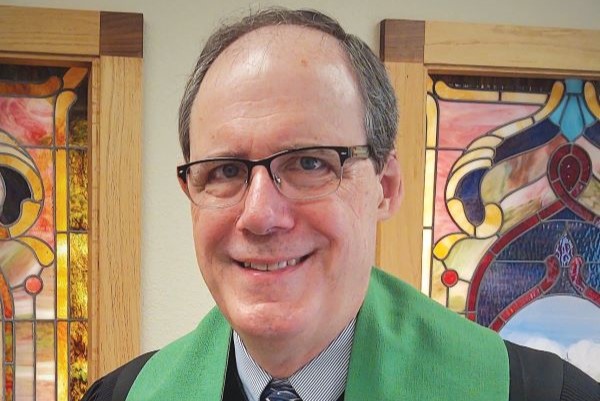
For Stuart Pickell, MD, that prompt marks the most important words anybody has ever said to him.
“It was the best advice ever given to me because it’s too easy to talk yourself out of doing things that are worth doing,” the Fort Worth internist and pediatrician told Texas Medicine.
Without that simple two-word inquiry, he wouldn’t have started down the path to an almost 30-year career as a physician. He said he would have continued in his first calling as a minister “and thought that would have been that.”
But “providence intervened” after four years of being a youth and family minister at Fort Worth’s First Presbyterian Church, and he pivoted to his current career.
Dr. Pickell now believes his ministry and medical care are intertwined, and he always sees how the teachings of his former career apply to the health of his patients. Medicine is the practical application of science, and ministry is the practical application of religion, he says. The applied subjects are people.
“One looks at more of the spiritual domain; the other looks at the physical domain,” he said. “But the more I looked at it, the more I realized the two are related. Both are ministries because you are ministering to people’s needs.”
The man of the cloth turned primary care physician continues to believe there’s no reason to contemplate an answer to that pivotal two-word question he asks himself from time to time.
Serving his many communities through leadership roles at the Texas Medical Association, Anne Burnett Marion School of Medicine at Texas Christian University, and multiple Fort Worth nonprofits focusing on medical care, Dr. Pickell says it all stems from his desire to help others.
“It’s important to stay grounded in the purpose behind what you’re doing,” he said. “When it comes to serving whatever community you’re part of, I think the ‘why’ really matters. For me, that ‘why’ is rooted in my faith. I’m motivated to do this work because I believe a loving God – who is as fully present for others as for me – has invited me into this kind of service.”
Path to seminary
A son of a Presbyterian minister growing up in Maryland and Virginia, Dr. Pickell says it was always natural for him to follow in the footsteps of his father, Charles. He was a youth leader in the Vienna [Va.] Presbyterian Church, a large congregation just outside Washington, D.C. where his father was the senior pastor. But he also knew he might want to go into medicine, so he joined the Vienna Volunteer Fire Department and became an EMT, but he was uncertain about how he wanted his career to unfold.
Dr. Pickell went to college at the College of William and Mary.
“I went to college not knowing what I was going to do,” he said. “I had picked six or seven different majors in my first two years, but I knew somewhere in the back of my mind I either wanted to go to medical school or seminary.”
One thing he did know was that whether he went to medical school or seminary it didn’t matter what he majored in. He was going to college in Williamsburg, Va. – the “cradle of American democracy,” and he loved history, so he decided to major in it. He also took all the prerequisites for medical school as well as classical Greek and some religion as electives.
By his junior year he had decided to pursue medicine, but providence intervened when he misscored the bubble sheet on one of the MCAT tests resulting in a low score in his strongest subject. He decided to apply only to the schools he wanted to go to – no fallback schools – knowing he could retake the MCAT and reapply. In the meantime, he began to reassess his calling.
“I was more comfortable with ministry,” Dr. Pickell said. “Medical school always seemed like a stretch because I didn’t really have any mentors who were doctors.”
While weighing his options, he worked at a hospital and a church for two years before choosing to attend Princeton.
Ministry outside the church
Upon graduation from Princeton in 1987, Dr. Pickell’s first post-graduate role in the church was a youth and family minister at First Presbyterian Church, the oldest and still largest congregation for that denomination in Fort Worth. He was led west by the senior minister at the church who also was a member of Princeton’s board of trustees.
The then youth and family minister had made his decision – but medicine was still in the back of his mind.
“Even in seminary I remember thinking to myself ‘If I had gone to medical school I would be graduating this year,’” he said.
When he consulted his father about his dilemma his father advised him to pick something and stick with it.
“I figured I would just start a career in ministry, and I wouldn’t go to medical school,” he said.
His community was now the families in his congregation and the Texan environs. One of his initial Sunday sermons that first year at First Presbyterian was titled “Measuring Up to an Immeasurable Standard.” During the next four years, he often contemplated serving a larger community role.
“I would sit in my office and look out my window and think: ‘Perhaps my ministry was outside the church,’” he said.
That’s when “Why not?” first entered his life.
“I was in the narthex, waiting to line up with the choir and other ministers,” Dr. Pickell said. “Gordon Van Amburgh, member of the congregation and a family therapist, was standing there, too, and I casually mentioned to him that I had always wanted to go to medical school.”
“I told him that I didn’t think it was feasible to have two careers at that point,” Dr. Pickell said. “Gordon looked at me and said, ‘Why not?’ Then I began to think that if I do well [on the MCAT] and get in, that’s a God thing. I will be led in that direction.”
A year later he hit high marks, and a year after that he enrolled at UT Southwestern Medical School.
Between his first and second year of medical school he spent 12 weeks serving as an interim pastor in Clifton, a burgh of 3,400, about 80 miles south of Fort Worth. It was there that he met his wife, Emily, who had grown up in the city. Her father was a family physician, and both her parents were raised in Fort Worth. Providence again.
Upon completion of his residency in Mississippi and a quick stop in Nashville, the Pickells rerouted their nascent family to Cowtown. For the past quarter century, Dr. Pickell has applied the main tenets of his two careers to the community that surrounds him.
As he pondered that relationship while building his practice, Dr. Pickell looked for a way to serve in a “ministerial capacity” within medicine. The end result of those brainstorming sessions was Texas Talks, a nonprofit organization he helped to found and has chaired since its inception in 2015. Texas Talks promotes meaningful conversations for patients who are near the end of their natural lives to help them articulate their treatment preferences and communicate those preferences to their health care providers.
Dr. Pickell wanted to establish an organization that could bring physicians, social workers, faith leaders, and patient advocates to emphasize the importance of shared decision-making when facing serious or advancing illnesses.
Serving in his community also means filling the role of medical director of Project Access, an initiative started by the Tarrant County Medical Society (TCMS) to expand access to health care for low-income, uninsured residents of the county. Its mission is to bridge gaps in care for individuals who otherwise have limited or no access to specialty medical services.
For the past 10 years, Dr. Pickell has dedicated much of his time to what he calls “another mix of medicine and ministry”: ethics.
When TCU made the decision to launch its school of medicine in 2015, he was approached by Stuart Flynn, MD, founding dean of the Burnett School of Medicine, to lead in the development of the school’s ethics curriculum, in part due to his dual-career background.
In most schools of medicine, ethics is a dedicated course that’s taught once, Dr. Pickell says. At the Burnett School of Medicine, it’s a “theme,” which means discussion of the topic presents itself in multiple courses over a typical four-year student workload.
“Because [ethics is] a theme, it’s woven into the fabric of the curriculum,” he said. “It’s something that bubbles up every year to reinforce the notion that ethics is something they will deal with throughout their career. It’s not ‘one and done.’”
Dr. Pickell has served as a professor of internal medicine and the ethics theme lead for the school since it opened its doors in 2019.
“I tell students there’s that there will be times when they will encounter ethical situations in caring for their patients,” he said. “They will going to be a difficult situation with you and a patient, and you could have to make some challenging decisions.”
He tells them that at such times they will probably be the medical ethics expert in the room. “It’s important to train physicians to be better communicators, which includes recognizing the ethical red flags that could be pop up early in a relationship with a patient or family.”
Currently he serves as the vice chair of the TMA’s Board of Councilors, a collaborative body within the association that helps shape policy or recommendations on end-of-life care, informed consent, physician-patient communication, reproductive health ethics, and new technologies.
In the past he’s served on TMA’s councils on health services organizations, medical education, public health, and constitution and bylaws. He was president of TCMS in 2022 and is the vice president of the TMA Foundation Board of Trustees.
Dr. Pickell continues to preach “when he’s called to do it.” His name still appears on a list of potential guest ministers for churches in north Texas, and he’ll step in when he’s asked. In 2024, Dr. Pickell delivered a handful of sermons at First Presbyterian Church in his adopted hometown of Clifton.
As he reflects on his career and future plans, Dr. Pickell mentions praxis – the process by which a lesson is applied. This holds true for his career journey that has interwoven medicine and religion.
“I have always aimed to apply what I learn to improve people’s lives and the life of the community.”