
When it comes to improving patient care and outcomes, no one is more equipped to lead change than physicians, says Spring pediatric neurodevelopment specialist Surabhi Kaul, MD.
“Leadership is something that’s not taught to us in medical school or residency. But I realized that being a leader is a natural part of being a physician,” she told Texas Medicine Today. “Yet I was there at the junction where I thought that those leadership skills didn’t come naturally.”
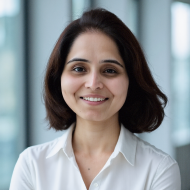
Determined to make a difference, Dr. Kaul joined the Texas Neurology Society at a First Tuesdays at the Capitol event, where she was impressed by the Texas Medical Association’s preparation and coordination – and at which she met several TMA Leadership College graduates.
“It just seemed like the next step in what I wanted to learn,” she said. “When I looked through the program, I really liked what it looked like. I’d heard great things from the graduates, and I was really glad that I was accepted.”
As part of the Leadership College curriculum, Dr. Kaul examined the best way to channel her developing skills and interest in positive change. Just as she was unaware of TMA’s breadth and impact before joining, she realized peers in her community didn’t know they had a local home in their Montgomery County Medical Society, for which Dr. Kaul now serves as secretary-treasurer.
“We had excellent leaders, however, I did not see involvement of the young physician, so I wanted to identify, what are the barriers?” she said.
Drawing on her own experience and survey data she collected, Dr. Kaul found her peers wanted more opportunities for camaraderie and mentorship – and often did not know to look to the county society to find them. Namely, 86% of respondents said they would be interested in joining the society if they could find a mentorship program, or if they could join a young physicians or women physicians section.
Dr. Kaul’s research also highlighted “the role of social media and outreach to increase awareness of our existence. Because if people don’t know we exist, they’re not going to show up,” she said. “Before I did Leadership College, I was kind of scared about social media, talking, and doing public interviews. But I realized in the age we live in, there is so much tremendous potential in social media.”
Montgomery County Medical Society has long wanted to lean into this kind of research and development, Dr. Kaul says, and she is looking forward to growing participation.
“For us, every new member is vital,” she said.
She took a similar lesson from attending TexMed 2026: in organized medicine, each voice is important.
“One of the things that I was thinking is, ‘What do I have to contribute?’ And I emerged out knowing that each of us has so much to contribute,” she said. “Again, I met so many wonderful physicians who I say are now friends, mentors, leaders. I was very impressed to know that people want us. Physicians, TMA staff, they want you to be involved. Each of us has such an important role that we can play, unlike what I was thinking when I went in.”
For more information on the Leadership College including the application and selection process, visit its webpage.