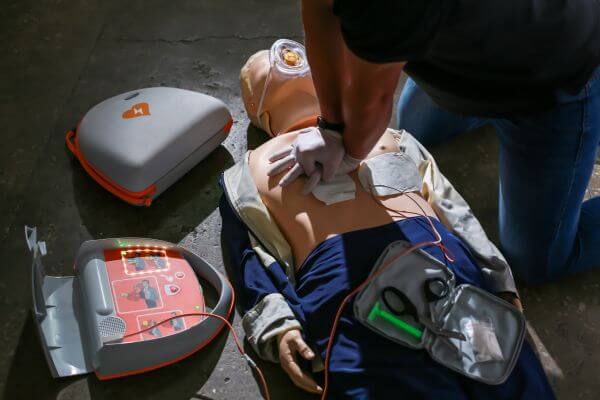
In sudden cardiac arrest, the minutes before paramedics arrive often determine whether a patient lives, and two bystander skills can substantially improve the odds: hands-only CPR to keep blood circulating and an automated external defibrillator (AED) to restart the heart.
A new Austin Public Health outreach initiative aims to put both skills into more residents’ hands, and it’s a model that Texas physicians anywhere can replicate to close a cardiac arrest survival gap in their own communities.
Austin’s bystander CPR survival rate was 10.1% in the last fiscal year, far below cities such as Seattle (17%), says Austin's chief medical officer, Mark Escott, MD. Sixty more lives in Austin could have been saved in 2025 had its rate matched one of the nation's highest totals, said Dr. Escott, a consultant to and former chair of the Texas Medical Association's Committee on Emergency Services and Trauma.
“We need physicians, regardless of what community they’re in, to be champions for bystander CPR and AED use,” Dr. Escott said. “Whether that’s kids in schools, churches, or community centers, this is one of those areas where physician leadership has made a huge impact in other jurisdictions, and Texas is in great need for physician leaders to champion this cause across the state.”
CPR is only half the equation, though. Defibrillation in the first few minutes of a shockable cardiac arrest can substantially improve survival. AEDs put that capability into a bystander’s hands, but only when someone knows how to grab one and use it.
Austin’s bystander AED rate stood at 14.8% in 2025, edging the national average of 13.3%, but “we’ve got some work to do,” Dr. Escott said.
And the work is statewide. Cardiac arrest is most often a private crisis: data show 65% to 75% of cardiac arrest events happen at home, Dr. Escott says, meaning the people best positioned to save a life are usually the people who live with the patient.
TMA has advocated for expanded AED availability and access, and it encourages training in chest-compression-only CPR for all worksites and public buildings. During the 2025 legislative session, TMA backed House Bill 850 that would have required AEDs to be placed inside public and some private schools so they could be reached within three minutes of a cardiac event. The bill also called on schools to develop cardiac emergency response plans.
Austin’s outreach initiative is built on three priorities Dr. Escott says other Texas physicians and their communities can adopt:
- Place AEDs where they’re most needed. Although state laws and city ordinances already require AEDs in certain buildings, city health officials are now working to secure funding to put them at strategic high-call points throughout Austin neighborhoods. “That’s going to be the primary focus of our call to action over the next year or so,” Dr. Escott said.
- Pair AED access with community training. Dr. Escott wants community groups, schools, and nonprofits to get involved and help teach life-saving skills for instances when emergency responders can’t get there fast enough.
- Educate residents on appropriate use of 911. More than 40% of calls to Travis County 911 services are for non-life-threatening emergencies, Dr. Escott says, tying up resources for actual crises. “Part of the solution is really educating the public on when to call 911 and when not to call,” he said.
Beyond CPR and AEDs, Dr. Escott says physicians play a major role in teaching the public how to handle a range of emergencies, including how to deploy naloxone nasal spray during an opioid overdose and how to stop massive hemorrhage.
“For physicians who want to be engaged in community action, importance, and empowerment, those are the three areas,” Dr. Escott said.
Read more about TMA’s public health advocacy efforts.